






The History of Fleet Week in San Francisco

The History of San Francisco Fleet Week
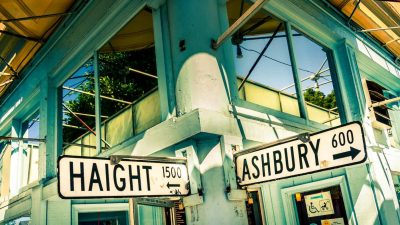
There are a lot of things in San Francisco that you can take for granted after living here for a while. When I first moved to the city from a small town the East Coast, it almost didn’t seem real. Walking through the Haight, driving across the Golden Gate Bridge, going to a concert at The Fillmore or the Warfield and even spending some time at Pier 39 were all available to me anytime that I wanted. I could drive to Pebble Beach for a round of golf or head up to Lake Tahoe for a day of snowboarding. However as time goes by, the excitement fades and you may not realize just how awesome San Francisco. You drive past the Palace of Fine Arts without a second glance. You skip that show at The Independent because you are just “too busy” with work.
San Francisco gets some bad press, just like any major city. Sure, there are some things that aren’t perfect, but the benefits and advantages far outweigh any of the negatives. The Bay area offers Outside Lands, Bottlerock, amazing golf, wine country, amazing skiing just a few hours away, incredible restaurants, historic music venues and so much more including Fleet Week.
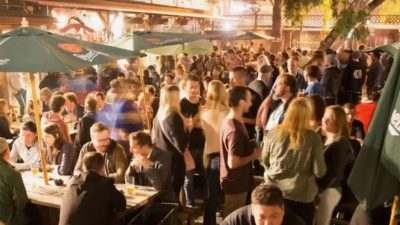
While Fleet Week may just mean a full weekend of partying on rooftops and day drinking for some people (I was definitely one of those people back in the day), it is also a fun family-friendly activity, a great time to see some military bands at various venues and a way to learn a little bit more about the military through ship tours and other events. But Fleet Week can also be something that you just get used to without realizing how cool it really is to have something like this in San Francisco. Did you know that San Francisco Fleet Week is the largest event of its kind and San Francisco is the only major city that hosts a week long, dedicated Fleet Week with Blue Angels appearances every year. Until I actually did some research, I guess I thought that maybe this was something that a lot of other cities do as well. But no, San Francisco is the only city to host an amazing event like this at a large scale. So whether you are enjoying a bloody mary on a rooftop in The Marina or sitting on a blanket on Marina Green with the kids, remember that this is just one of the long list of things that make San Francisco awesome.
What is Fleet Week?
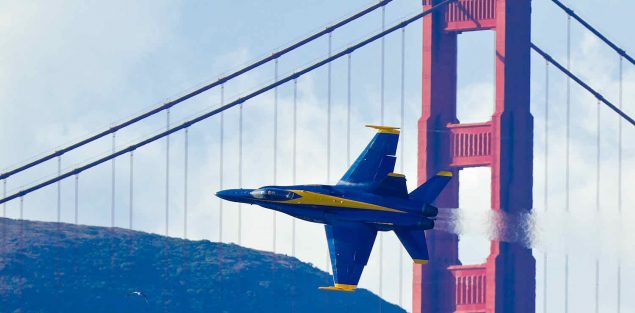
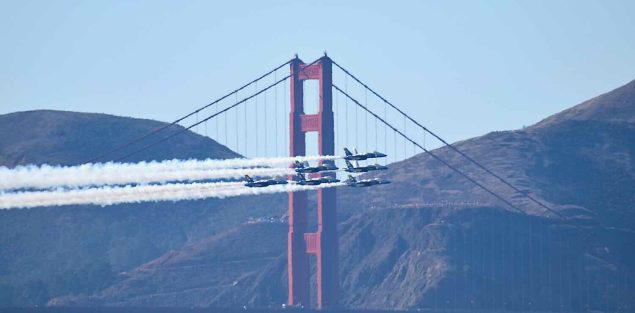
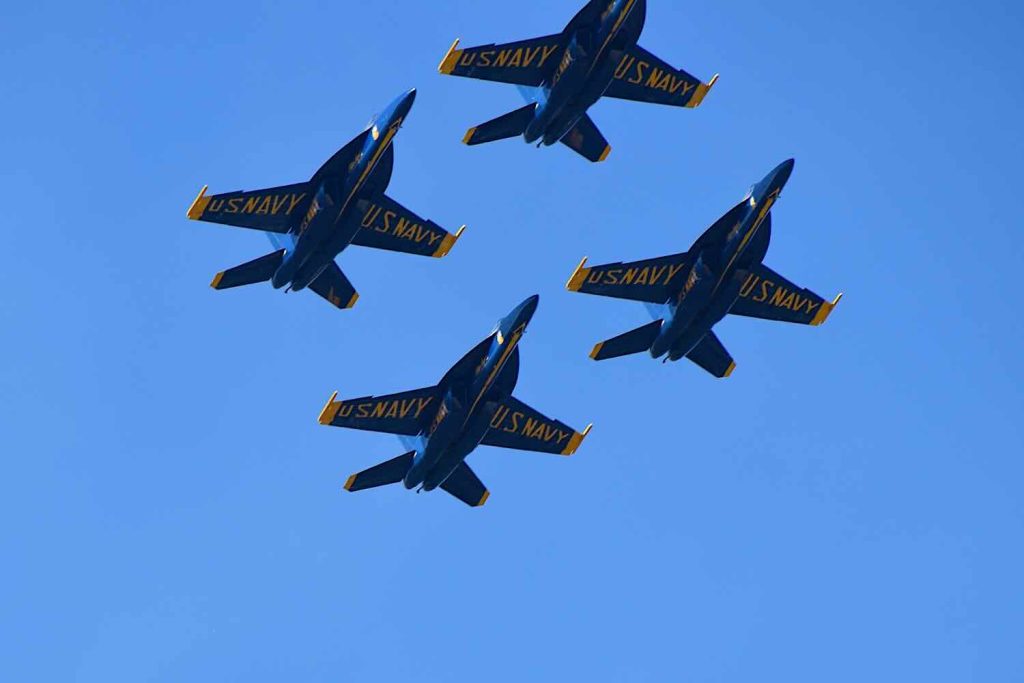
San Francisco Fleet Week is an annual celebration honoring the United States Navy, Marine Corps, Coast Guard + other service members. The week includes military ship tours, the Parade of Ships beneath the Golden Gate Bridge, concerts, emergency preparedness events and an air show over San Francisco Bay featuring the Blue Angels.
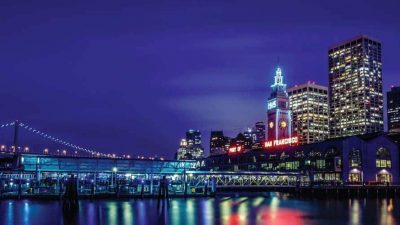
Since its 1st year, Fleet Week has grown into one of San Francisco’s largest annual events. It is usually held in early October and attracts big crowds to the city. The Parade of Ships traditionally opens the main celebration, with Navy and Coast Guard vessels sailing beneath the Golden Gate Bridge before docking along the Embarcadero. Many ships then open for free public tours, giving you a rare chance to meet crew members and see working military vessels from the inside.
When did Fleet Week Begin?
San Francisco Fleet Week officially began in 1981, when Mayor Dianne Feinstein organized a public celebration honoring the United States Navy, Marine Corps & The Coast Guard. The event was created based on San Francisco’s long relationship with the military and its history as one of the West Coast’s most important port cities. During World War II, millions of service members passed through the Bay Area on their way to and from the Pacific.
San Francisco’s Naval History
San Francisco’s relationship with the United States Navy began long before the first official Fleet Week in 1981. Its location near the entrance to the Pacific made the Bay Area an important center for shipbuilding, repairs, military transportation, naval operations and basically any and all kinds of military activities.
During World War II, the region became one of the country’s most important military staging areas. Large numbers of troops passed through San Francisco on their way to and from the Pacific. The Hunters Point Naval Shipyard repaired ships. Treasure Island, Mare Island and the Naval Air Station Alameda supported military operations throughout the Bay Area.
San Francisco residents were accustomed to seeing naval ships in the bay and sailors walking through downtown. Ships regularly visited the city and some were opened for public tours. Local families occasionally welcomed visiting sailors into their homes. Restaurants and bars offered specials to service members. That relationship began to change after the war. Shipping companies moved many of their operations across the bay to Oakland since there was more room for modern container facilities. Naval ship repair contracts were also increasingly awarded to facilities in Southern California and the Pacific Northwest.
By the beginning of the 1980s, San Francisco’s ship repair industry was struggling. City leaders were concerned about the loss of waterfront jobs and the weakening of San Francisco’s relationship with the Navy.
Dianne Feinstein’s Plan for Fleet Week
The modern San Francisco Fleet Week was largely the work of Mayor Dianne Feinstein. She saw the event as both a public celebration and an economic strategy. President Ronald Reagan’s administration was planning a major expansion of the Navy. This was often described as the push for a 600 ship fleet. More ships would mean more construction, maintenance and repair contracts. Feinstein wanted San Francisco businesses and workers to receive a share of that work and the large amounts of payments that would go with it. So Feinstein decided that she would make San Francisco so welcoming for all aspects of the military that they couldn’t possibly deny SF a share of the work. If San Francisco gave the Navy and its sailors an unforgettable welcome, military leaders might be more likely to consider the city when awarding future contracts.
Planning the event required cooperation among City Hall, the Navy, waterfront businesses, port officials and more. The celebration was arranged around the city’s Italian Heritage Weekend in October. Organizers planned ship arrivals, public tours, receptions, ceremonies and aerial performances. Feinstein personally promoted the idea and promised Navy leaders that San Francisco would treat visiting sailors exceptionally well. According to a historical account published by the San Francisco Chronicle, she said the city would show the Navy that San Francisco was the greatest Navy city in the country.
The city prepared an awesome reception. Sailors and officers were invited to events & residents/businesses were encouraged to welcome them. Fleet Week was meant to show that the entire city supported the Navy’s presence.
The First Fleet Week in 1981
The first San Francisco Fleet Week took place in October 1981. Compared with later celebrations it was a pretty small event. It included three destroyers, several support vessels and approximately 2,200 sailors and officers. Crowds gathered along the shoreline to watch the ships enter the bay. Sailboats surrounded the visiting vessels and fireboats from San Francisco and Oakland sprayed tall streams of water into the air as a welcome.
The Blue Angels also returned to San Francisco for fleet week and it was their first performance over the city since the early 60s. City Hall hosted a large reception for about 1,000 sailors. Feinstein presented keys to the city to officers and gave a silver tea service to the commander of the USS San Francisco. The newly commissioned submarine made its first namesake visit to the city during Fleet Week in November 1981.
Feinstein’s idea worked and would end up paying offas the welcome impressed Navy officials and visiting crews. Although the event did not immediately restore San Francisco’s ship repair business, it succeeded as a public celebration. Residents came out in large numbers, local businesses benefited from the visitors and the city had created an event people wanted to see again.
The Early Years of Fleet Week SF
Fleet Week returned in 1982 with another parade of military ships beneath the Golden Gate Bridge. Thousands of people lined the waterfront to watch. The second year helped establish that the first celebration had not been a one time event. During the years that followed, Fleet Week developed a familiar structure. The Parade of Ships announced the fleet’s arrival, public ship tours allowed you to check out naval vessels & speak with crew members. Receptions, concerts, community events & more brought sailors into different parts of the city.
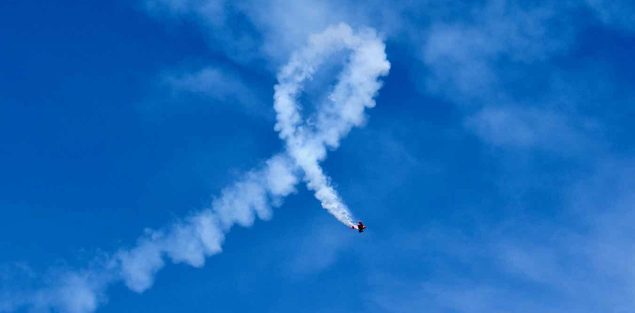
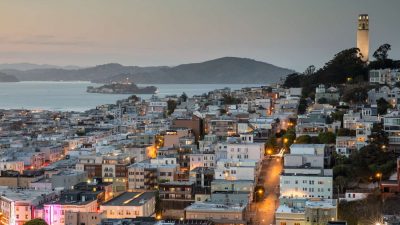
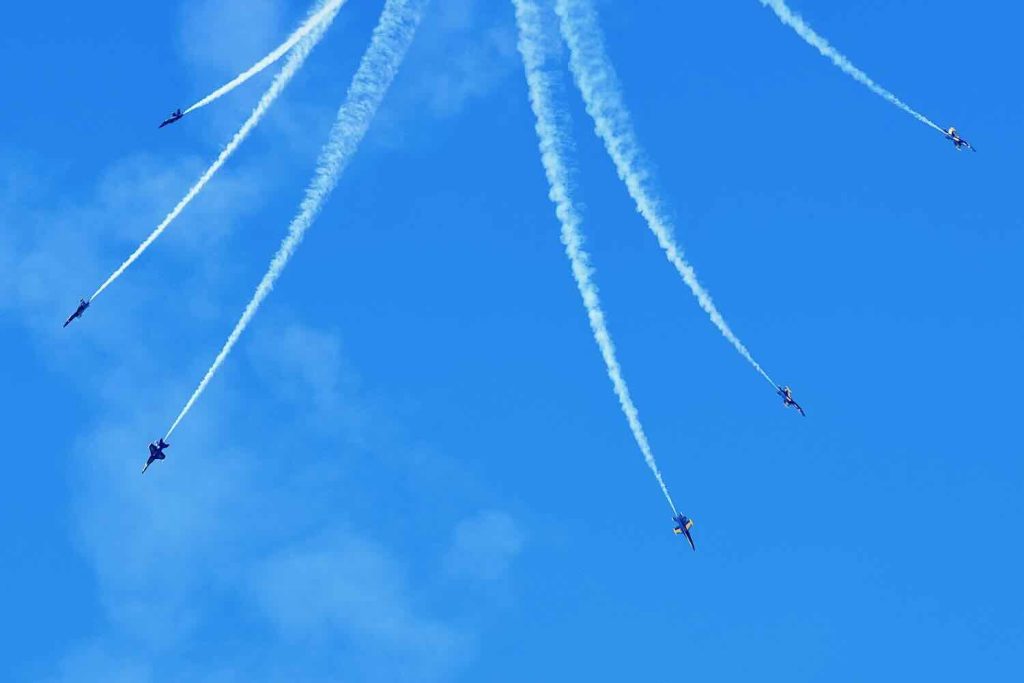
The air show became the main attraction for many spectators. The San Francisco Bay created a cool setting for aerial demonstrations. Aircraft could fly between the Golden Gate Bridge and Alcatraz while spectators watched from Marina Green, Crissy Field, Fisherman’s Wharf, Aquatic Park, Fort Mason and boats throughout the bay. The Blue Angels gradually became the big attraction of Fleet Week. Even people who did not attend an official event knew Fleet Week had arrived when the jets began practicing above the city.
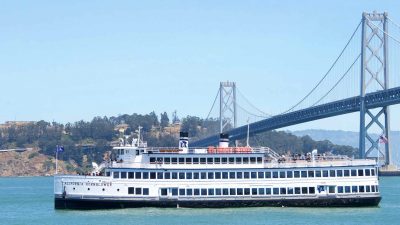
As attendance grew, the event expanded from a naval visit into a huge celebration all across SF. Hotels filled with visitors, restaurants and bars welcomed sailors and sightseeing boats offered special Fleet Week cruises. The event became an important fall weekend for businesses around Fisherman’s Wharf, North Beach, the Marina and the Embarcadero.
Fleet Week remained connected to Italian Heritage Weekend since it is traditionally celebrated around the same time. The two events helped turn the October weekend into one of the busiest periods on San Francisco’s annual calendar. When you add in Halloween, October is pretty much the best time to enjoy San Francisco.
Memorable Moments
Over the decades, San Francisco Fleet Week has welcomed destroyers, cruisers, Coast Guard cutters, submarines, aircraft carriers and a whole bunch of interesting things to the Bay. One of the cool historic moments took place in the 80s was when San Francisco became connected to the recommissioning of the USS Missouri. The famous battleship had served during World War II and was the site of Japan’s formal surrender in 1945. The ship was recommissioned at the San Francisco waterfront in 1986 as part of the Reagan administration’s naval expansion.
Large aircraft carriers also became major attractions whenever they visited the bay. In 2011, the USS Carl Vinson, a Nimitz-class nuclear-powered aircraft carrier, sailed beneath the Golden Gate Bridge for Fleet Week. The sight of the enormous carrier entering the bay became an iconic image of Fleet Week. You can check out pictures online of it traveling under the Golden Gate Bridge, but seeing it in person was way different. The ship is massive. However, now with the opening of the James R. Herman Terminal in 2014, you can regularly see even larger cruise ships cruising through the bay.
Expanding the Experience
For many years, Fleet Week was best known for ships, sailors and the Blue Angels. Beginning in 2010, organizers added a more practical purpose. San Francisco officials began working with the Navy, Marine Corps, etc. on humanitarian assistance and disaster response training. The idea was to use Fleet Week’s visiting personnel, equipment and ships to prepare for a real emergency.
This program is especially important in the Bay Area, where a major earthquake could damage roads, bridges, hospitals and communication systems. If normal transportation routes became unusable then military ships, helicopters and logistical teams could help. Fleet Week exercises have brought military personnel together with the San Francisco Department of Emergency Management, Police Department, Fire Department, Sheriff’s Department, Port of San Francisco & federal agencies. Training scenarios have covered emergency transportation, debris removal, medical care, supply chains and reaching neighborhoods isolated by an earthquake. As a resident of the Marina, this is actually pretty amazing. Knowing that a fun event like Fleet Week also helps make emergency response better in case of a large earthquake is wonderful.
The Humanitarian Assistance Village later gives you a chance to see vehicles, equipment and demonstrations connected to emergency response. This addition changed Fleet Week from primarily a public show into an annual opportunity for serious planning and coordination. If you look at the Fleet Week schedule and see the Humanitarian Assistance Village listed every day, now you know what it is. I have been there a few times and plan to take my son there this year since he is finally old enough.
A Few Difficult Years
Fleet Week has faced several issues since it began. In 2013, federal budget cuts grounded the Blue Angels and canceled much of the military participation planned for that year, The event returned in 2014.
The COVID-19 pandemic forced organizers to cancel the traditional in-person celebration in 2020. In 2021, Fleet Week was back in full swing, which was an important sign that large public gatherings were beginning to come back.
Fleet Week faced another unusual situation in 2025, when a federal government shutdown prevented the Blue Angels and other U.S. Navy and Marine Corps units from participating. Organizers continued with a modified schedule. The Royal Canadian Air Force Snowbirds headlined the air show, while the Colombian Navy’s triple masted training ship ARC Gloria visited the Port of San Francisco. Even though the Blue Angels get a lot of the headlines, Fleet Week has become such a big event for everyone in the Bay Area that the show will still go on even if there are some issues.
Fleet Week Today
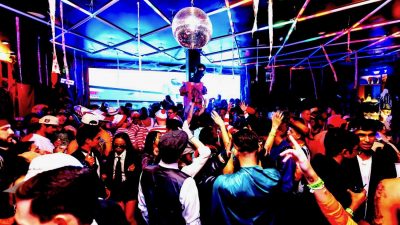
Today, San Francisco Fleet Week includes much more than its original organizers planned in 1981. The schedule commonly features the Parade of Ships, free ship tours, the waterfront air show, military band concerts, educational programs, emergency-response demonstrations and events in neighborhoods across the city. There are viewing parties, afterparties and all kinds of evens that pop up and the bars and nightclubs all over the city get filled up quickly with all of the people in the city.
Fleet Week attracts more than one million spectators to the Bay Area. People watch from waterfront parks, rooftops, hills, boats, public piers and any place in the city where you can get an elevated view.
Dianne Feinstein’s original economic goal had mixed results. Fleet Week did not reverse the long decline of San Francisco’s ship repair industry, and major naval facilities around the bay eventually closed or changed uses. The event itself, however, succeeded far beyond its modest first year. What began with three destroyers, several support ships and a welcome from City Hall grew into one of the country’s largest Fleet Week celebrations. It now helps to support local businesses and bring in money to the city from tourism. Plus it is one of those things on the list of everything that makes San Francisco great.
More than four decades later, it kind of remains the same. Ships pass beneath the Golden Gate Bridge, sailors arrive at the waterfront and crowds look toward the bay and sky. And it all takes place during the time of year when the weather is perfect (usually).